cost optimization
How To Run AI In The Cloud While Keeping Costs Under Control
How to run AI workloads in the cloud without runaway GPU bills: right-sizing, spot instances, auto-scaling, and shutting idle clusters down.
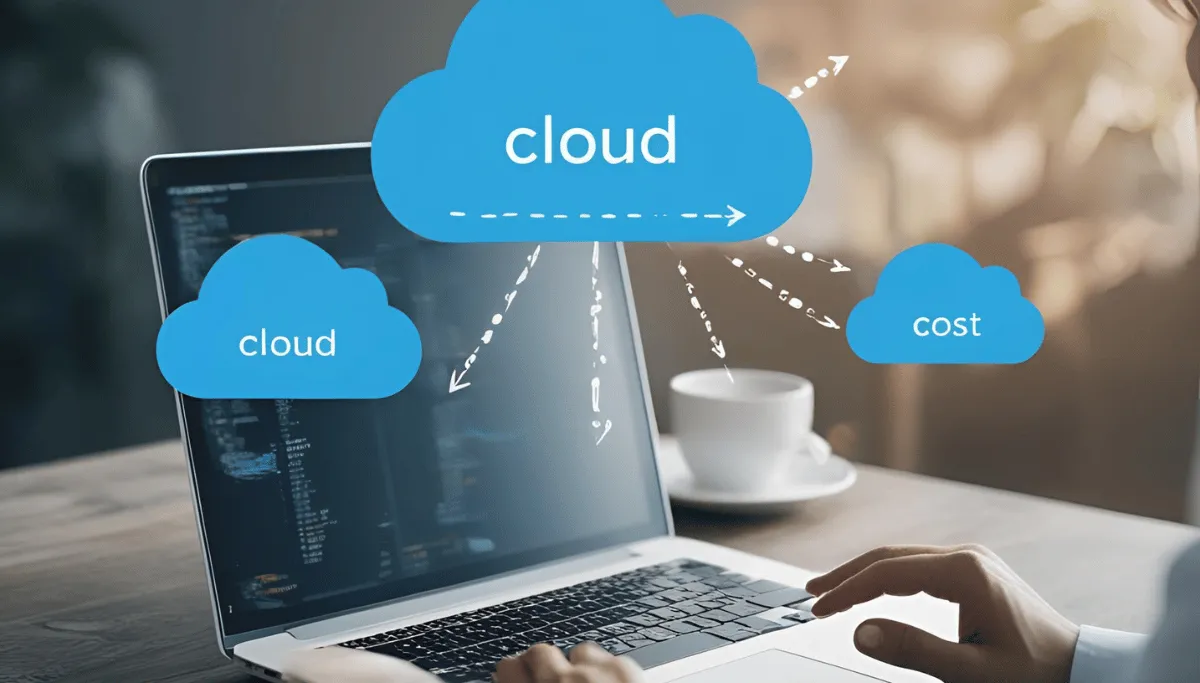
The rise of AI has created new opportunities—and new challenges—for organizations in every industry. Running AI workloads in the cloud offers scalability and access to cutting-edge tools, but without proper cost governance, expenses can quickly spiral out of control.
At CloudMonitor, we work with clients across various sectors to ensure their AI initiatives stay cost-effective. Here’s a practical guide to running AI in the cloud while keeping costs in check.
1. Right-Size Your Compute Resources
AI workloads often rely on GPU-enabled VMs or high-performance compute clusters. These resources are expensive and must be matched to workload requirements:
-
Use auto-scaling and spot instances where appropriate.
-
Shut down idle resources with automation.
-
Choose the right VM family (e.g., Azure NC series vs. ND series) based on your training vs. inference needs.
2. Separate Development and Production Environments
Keep experimentation (dev/test) separate from production workloads:
-
Assign different budgets and cost alerts to each environment.
-
Use Azure Machine Learning or similar platforms that support isolated compute environments and cost tracking per experiment.
3. Leverage Serverless & Managed Services
Where possible, replace always-on infrastructure with serverless or managed options:
-
Use Azure Functions for inference tasks that don’t require constant uptime.
-
Use Azure OpenAI Service instead of hosting and fine-tuning your own models, especially for general-purpose language models.
4. Monitor Data Storage and Transfer Costs
AI workloads generate large volumes of data—training sets, models, and outputs:
-
Store data in tiered storage (e.g., Hot/Cold/Archive).
-
Minimize cross-region transfers and unnecessary reads/writes.
-
Use Data Lifecycle Policies to automate archival.
5. Track Costs by Project and Team
Adopt tagging standards and organize resources by resource groups, projects, and teams:
-
Use CloudMonitor to break down AI costs by model, pipeline, and team.
-
Set budgets and thresholds to trigger alerts or automation.
6. Optimize the Model Lifecycle
Training large models is costly. Revisit the full ML lifecycle for cost-saving opportunities:
-
Use pre-trained models when possible.
-
Apply model compression and quantization for inference.
-
Archive and reuse trained models instead of retraining from scratch.
7. Adopt Cost-Aware MLOps Practices
Incorporate cost governance into your MLOps pipeline:
-
Run cost estimation before deployment.
-
Automate shutdown or scaling down after jobs complete.
-
Integrate CloudMonitor alerts into your DevOps tooling.
Final Thoughts
AI success in the cloud isn’t just about performance—it’s about sustainability. With the right controls, tooling, and practices, you can unlock AI’s full potential while avoiding budget overruns.
CloudMonitor provides real-time visibility and governance tools tailored for AI workloads on Azure. If you’re running—or planning to run—AI in the cloud, get in touch to see how we can help.
Keep reading
Cost Optimization
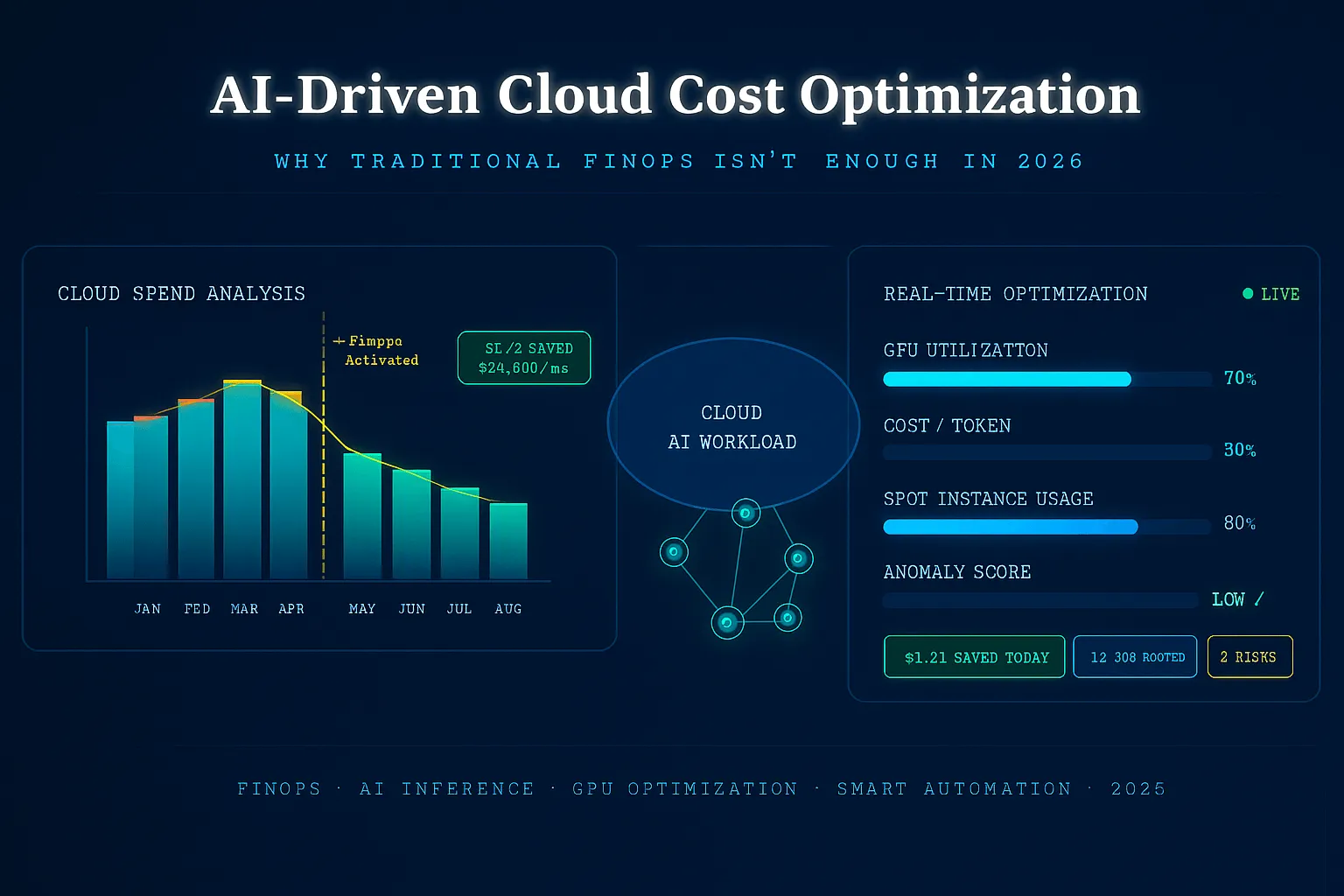
AI-Driven Cloud Cost Optimisation: Why FinOps Needs an Upgrade
Why traditional FinOps falls short for AI workloads, GPU clusters, and dynamic cloud environments in 2026 — and what AI-driven optimization adds.

Cost Optimization
Machine Learning for Predictive Cloud Cost Optimization
How machine learning turns cloud cost data into predictive optimization — anomaly detection, forecasting, and right-sizing that learn from history.
Cost Optimization
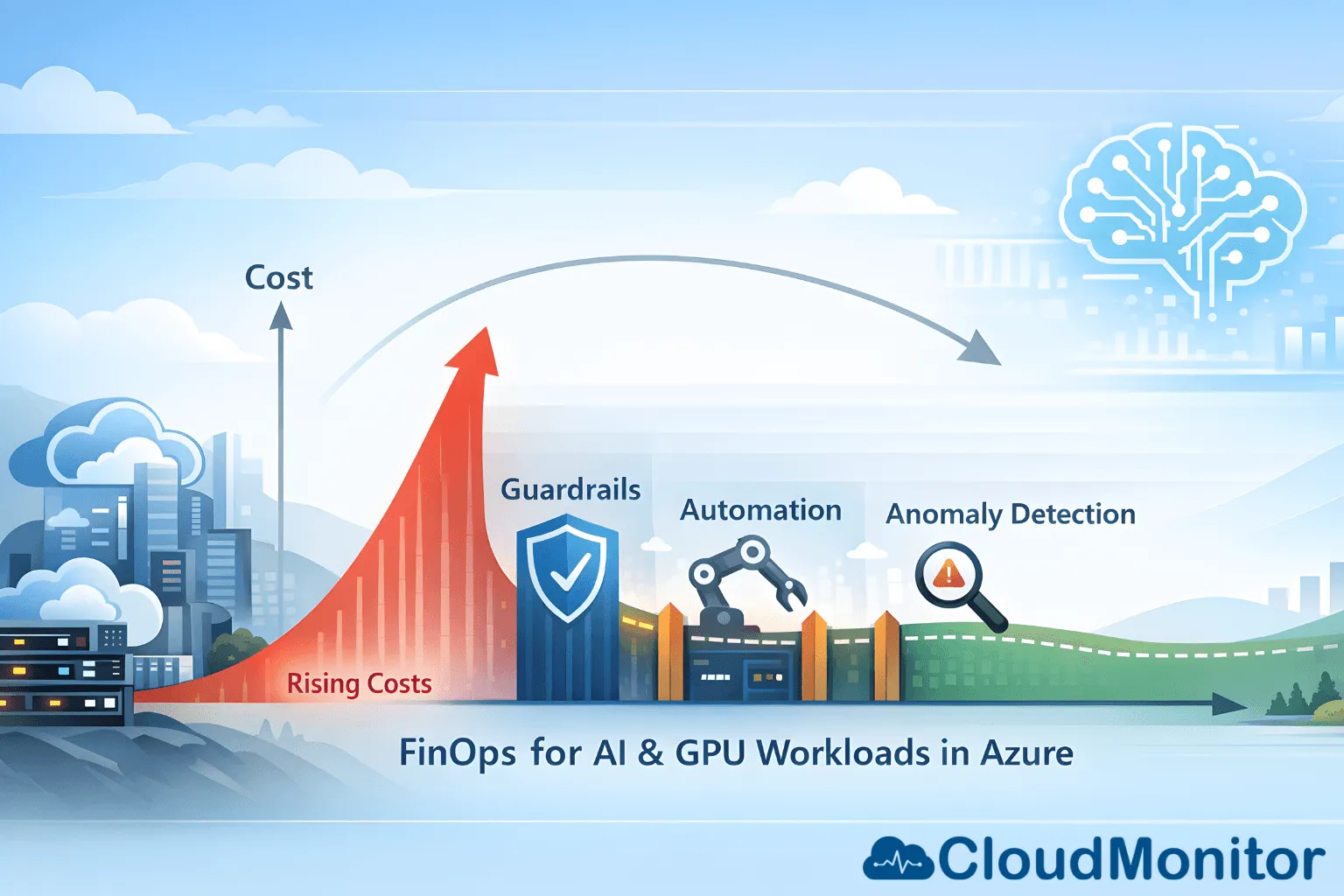
FinOps for AI and GPU-Intensive Workloads on Azure
FinOps for AI and GPU-intensive workloads on Azure — how to control inference, training, and experimentation costs without slowing innovation.