multicloud
Multi-Cloud Monitoring: Unified Visibility for AWS, Azure, GCP
How to get unified visibility across AWS, Azure, and GCP — the cost, performance, and compliance signals that keep multi-cloud sprawl in check.
Multi-cloud monitoring is no longer a nice-to-have for technology teams managing workloads across more than one cloud provider. As organizations spread infrastructure across AWS, Azure, and GCP to take advantage of best-of-breed services, the complexity of keeping tabs on cost, performance, and compliance multiplies rapidly.
Without a unified observability strategy, teams end up juggling three separate native consoles, three different alerting systems, and three sets of cost reports. The result is fragmented visibility, slower incident response, and ballooning cloud spend that is difficult to attribute or optimize.
This post outlines the key challenges of managing a multi-cloud environment, why a unified monitoring approach is critical, and how purpose-built platforms like CloudMonitor.ai are helping organizations take back control.
The Multi-Cloud Monitoring Challenge
Most enterprises do not set out to run three clouds at once. It typically happens incrementally. A development team adopts a managed Kubernetes service on GCP. A finance system migrates to Azure for compliance reasons. A data platform stays on AWS where it has always lived.
Before long, there is no single place to answer the most basic operational questions. Which service is causing latency spikes? Where is the unexpected cost coming from? Is the system behaving within governance boundaries?
Why Native Tools Fall Short?
AWS CloudWatch, Azure Monitor, and Google Cloud Operations are each capable tools within their own ecosystems. The problem is they are designed for single-cloud visibility. They do not correlate signals across providers, and they require engineers to context-switch constantly between platforms.
According to AWS multi-account and multi-cloud strategy guidance, even within a single provider, managing accounts at scale requires structured governance. Extending that governance across three separate cloud platforms compounds the challenge significantly.
Native tooling also lacks the FinOps context that finance and platform teams need to make intelligent spending decisions. Cost anomalies that cross cloud boundaries are virtually invisible in provider-native dashboards.
What Unified Multi-Cloud Monitoring Looks Like?
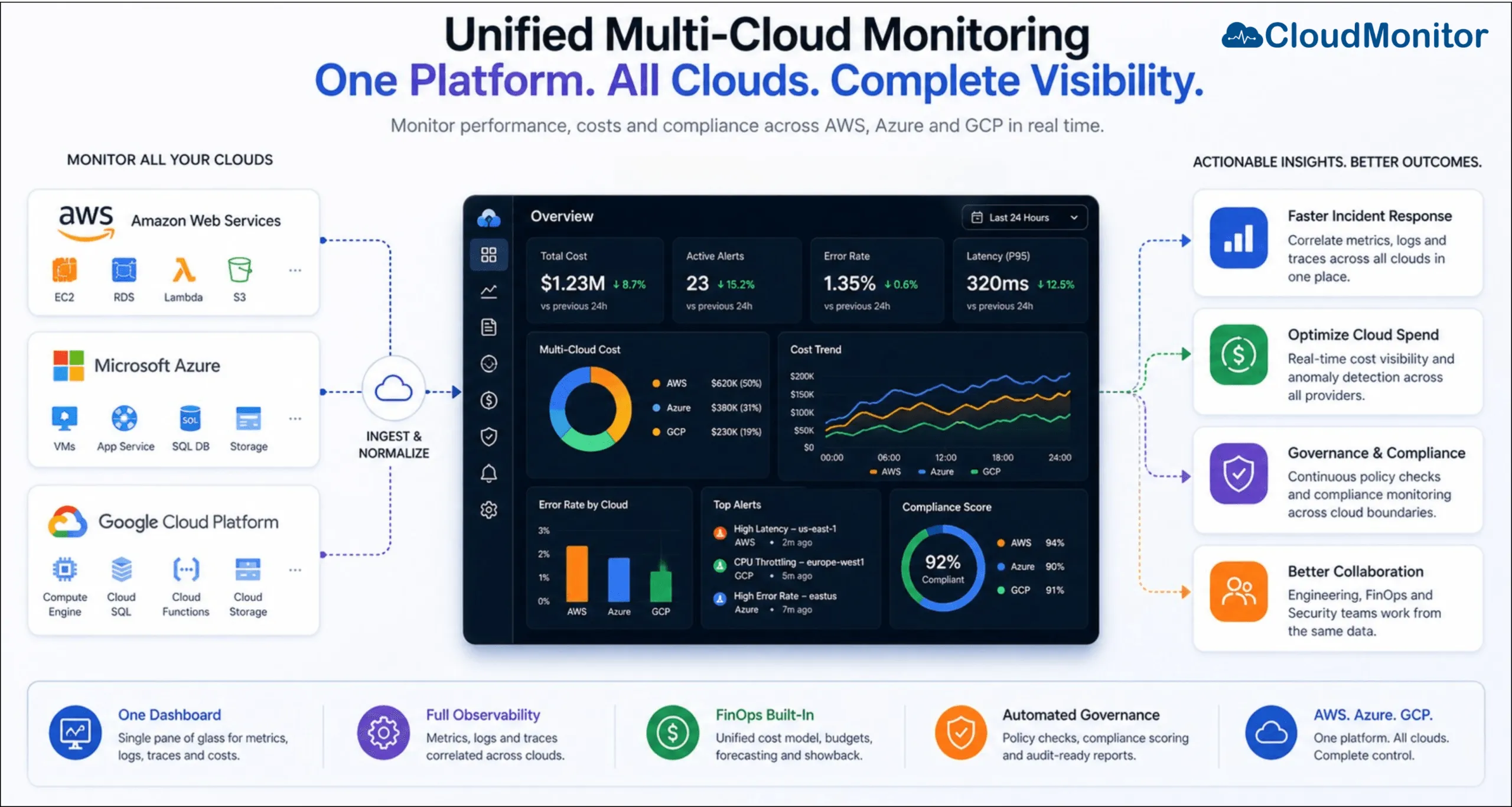
A unified multi-cloud monitoring platform ingests telemetry from all three major providers and presents it through a single interface. Instead of switching between consoles, engineers and FinOps practitioners work from one dashboard that surfaces correlated metrics, logs, traces, and cost signals in real time.
Metrics, Logs, and Traces in One View
Effective multi-cloud monitoring unifies the three core observability pillars across providers. Metrics show the health and performance of services. Logs surface error conditions and audit events. Distributed traces reveal how requests flow across cloud boundaries, which is especially important for microservices architectures that span AWS Lambda, Azure Functions, and Google Cloud Run simultaneously.
When these signals are normalized and displayed together, teams can identify the root cause of incidents in minutes rather than hours. They no longer need to manually correlate an AWS latency spike with a related Azure database error in a separate window.
Cost Visibility Across Cloud Providers
Multi-cloud monitoring without cost visibility is incomplete. One of the biggest risks of running workloads across multiple providers is the difficulty of attributing spend to teams, products, or business units when each provider uses different tagging conventions and billing structures.
The FinOps Foundation identifies cross-cloud cost allocation as one of the most significant challenges for FinOps practitioners managing multi-cloud environments. A unified monitoring platform that ingests billing data from AWS, Azure, and GCP, and normalizes it into a single cost model, makes this challenge tractable.
CloudMonitor.ai’s FinOps capabilities are designed specifically for this use case, giving teams real-time cost visibility across all three major providers with automated anomaly detection and budget alerting built in.
Governance and Compliance Across Cloud Boundaries
Multi-cloud environments also introduce governance complexity that single-cloud teams rarely face. Security policies, access controls, and compliance frameworks must be enforced consistently across AWS IAM, Azure Active Directory, and Google Cloud IAM, each of which has its own model and terminology.
A unified monitoring platform that surfaces policy violations and compliance gaps across all three providers allows security and governance teams to respond from a single queue rather than triaging alerts in isolation across separate consoles.
For organizations in regulated industries, this level of cross-cloud governance visibility is not optional. CloudMonitor.ai’s cloud governance capabilities provide automated policy checks, continuous compliance scoring, and audit-ready reporting across AWS, Azure, and GCP environments.
How to Build a Multi-Cloud Monitoring Strategy?
Getting multi-cloud monitoring right requires more than selecting a tool. It requires a deliberate strategy that aligns engineering, FinOps, and security teams around shared visibility goals.
Start With Tagging Consistency
Before ingesting telemetry from multiple providers, establish a common tagging taxonomy that applies across all three clouds. Tags for environment, team, application, and cost center must be enforced consistently or cost attribution and alerting will produce unreliable results.
Define Alerting Thresholds Across Providers
Multi-cloud monitoring is only valuable if alerts are actionable. Avoid the trap of routing every metric change to an alert queue. Define clear thresholds for latency, error rates, and cost anomalies at the platform level, and configure alert routing so the right team receives the right signal.
Consolidate Into a Single FinOps Workflow
The greatest efficiency gain from multi-cloud monitoring comes when engineering and finance teams work from the same platform. When cost data, performance metrics, and governance signals live in the same tool, decisions about scaling, rightsizing, and commitment purchasing can be made with full context.
CloudMonitor.ai brings all of this together in a single platform. Visit the CloudMonitor.ai platform overview to see how unified multi-cloud monitoring, FinOps dashboards, and automated governance work together to give your team complete visibility across AWS, Azure, and GCP.
STOP MANAGING THREE CLOUDS IN THREE DIFFERENT TOOLS
CloudMonitor.ai brings unified multi-cloud monitoring to AWS, Azure, and GCP in a single platform. Real-time visibility, FinOps dashboards, and automated governance – all in one place.
Keep reading
Finops
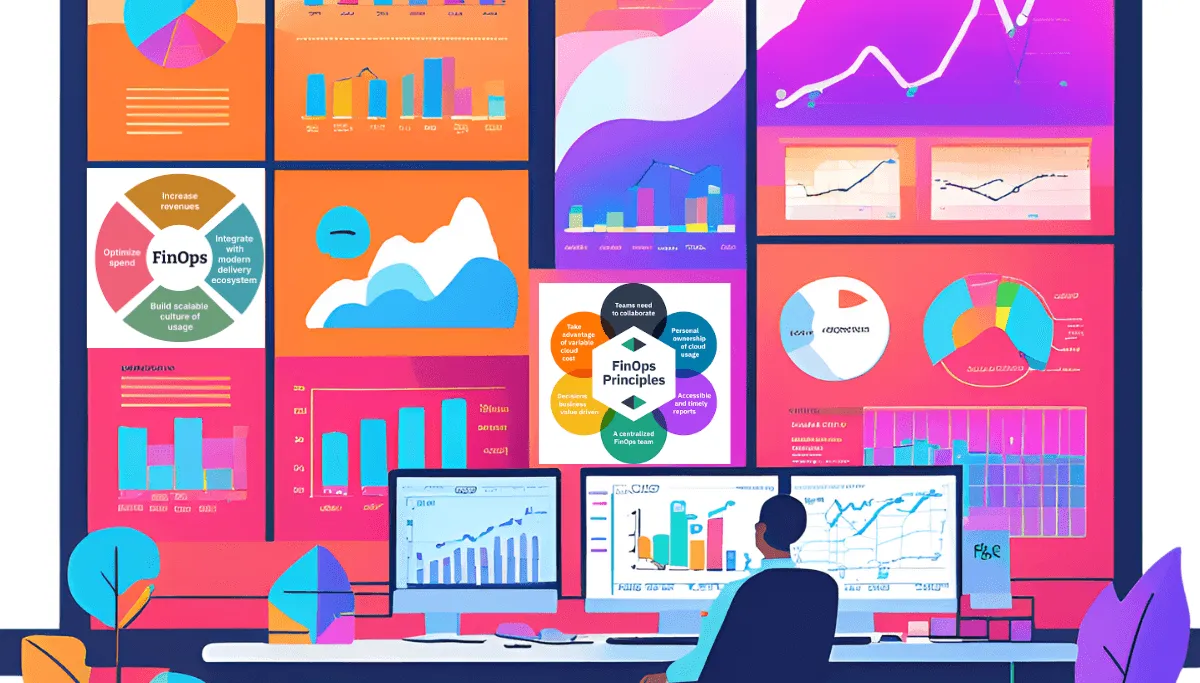
FinOps in Multi-Cloud: Strategies for Unified Cost Governance
FinOps strategies for multi-cloud environments — how to unify cost visibility, governance, and accountability across AWS, Azure, and GCP.
Finops
Implementing FinOps in a Hybrid Cloud Environment
FinOps for hybrid cloud: a unified approach to cost visibility and accountability when workloads run across on-prem, Azure, and AWS.
Multicloud
Azure vs AWS: The 2021 Cloud War, Market by Market
Azure vs AWS, side by side: market share, service breadth, pricing models, and how to pick the right platform for your workloads.