
Serverless Cost Optimization Across AWS, Azure & Google Cloud
Serverless computing has transformed how modern applications are built and scaled. It eliminates infrastructure management, enables rapid deployment, and aligns costs directly with usage. In theory, it sounds like the perfect financial model: pay only for what you consume.
In practice, however, serverless workloads can become surprisingly expensive.
Without proper visibility and tuning, execution time, memory allocation, concurrency spikes, and hidden data transfer costs can quietly inflate your monthly cloud bill. For FinOps teams, DevOps engineers, and cloud architects, mastering serverless cost optimization is no longer optional it is essential.
This guide explores how AWS Lambda, Azure Functions, and Google Cloud Functions structure their pricing, and more importantly, how to optimize them strategically.
Understanding the Real Cost Drivers of Serverless
Although each cloud provider has its own pricing nuances, the core billing logic is remarkably similar. Serverless platforms generally charge for:
- The number of invocations
- Execution duration (measured in milliseconds)
- Memory allocated (billed as GB-seconds)
- Outbound data transfer
The most significant cost variable is the relationship between memory and execution time. Allocating more memory increases the per-millisecond rate, but it can also reduce execution duration due to additional CPU power. The balance between these t
wo factors determines whether your function is cost-efficient or wasteful.
This is where most organizations lose control. Functions are often over-provisioned “just to be safe,” leading to unnecessary spending at scale.
AWS Lambda: Performance Flexibility with Cost Tradeoffs
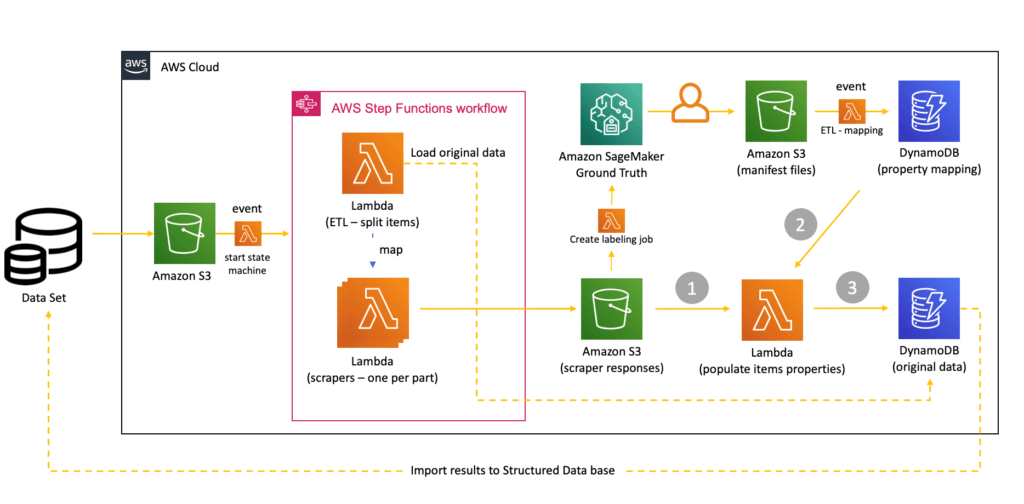
AWS Lambda remains one of the most widely adopted serverless platforms. It charges based on the number of requests and the total GB-seconds consumed. While AWS offers a generous free tier, production workloads quickly move beyond it.
One major cost factor in AWS is memory configuration. Since CPU allocation scales proportionally with memory, underpowered functions may run longer and cost more overall. Conversely, over-allocating memory increases the cost per millisecond unnecessarily.
Another key consideration is Provisioned Concurrency. This feature eliminates cold starts for latency-sensitive workloads but introduces a steady baseline cost. If applied broadly instead of selectively, it can significantly increase monthly spend.
Effective serverless cost optimization in AWS requires continuous performance testing, right-sizing memory, and limiting provisioned environments to critical services only.
Azure Functions: Choosing the Right Plan Matters
Azure Functions offers multiple pricing models, including Consumption, Premium, and Dedicated plans. The Consumption plan aligns closely with pure serverless billing, charging per execution and compute time. Premium plans, however, introduce pre-warmed instances for better performance consistency.
The most common mistake organizations make in Azure is selecting a Premium plan too early. While it improves cold start performance, it behaves more like reserved infrastructure meaning you pay whether it is used or not.
Azure’s Durable Functions feature also deserves careful evaluation. Long orchestration chains can unintentionally increase execution time and storage interactions, subtly raising costs.
For effective serverless cost optimization in Azure, organizations should evaluate traffic patterns carefully before committing to premium capacity.
Google Cloud Functions: Flexibility with Architectural Considerations
Google Cloud Functions follows a similar billing approach, charging for invocations, memory usage, CPU allocation (depending on generation), and networking.
Second-generation functions provide improved performance and configuration flexibility, but with that flexibility comes responsibility. Over-allocating CPU or failing to optimize timeout settings can drive costs upward.
Networking costs in Google Cloud are often underestimated. Cross-region communication and outbound data transfer can become major billing components if not architected efficiently.
Serverless cost optimization on Google Cloud often comes down to architectural discipline keeping services within the same region, minimizing unnecessary API chatter, and carefully selecting resource allocations.
The Hidden Cost: Data Transfer and Architecture Design
Across all three providers, one of the most overlooked cost drivers is data transfer. While compute costs may appear small, frequent cross-region calls, large payloads, and external API interactions can accumulate rapidly.
In many cases, optimizing architecture yields greater savings than adjusting memory settings. Reducing inter-service chatter, compressing payloads, and colocating services within the same region can significantly cut expenses.
Serverless cost optimization is not purely about configuration it is about intelligent system design.
A Strategic Framework for Serverless Cost Optimization
Rather than treating cost control as a reactive exercise, organizations should adopt a structured framework:
First, gain visibility at the function level. Identify which functions consume the most GB-seconds and which experience the highest invocation volume.
Second, test memory configurations systematically. Increasing memory sometimes reduces total cost by shortening execution time but assumptions must be validated through benchmarking.
Third, apply concurrency controls. Unlimited scaling is powerful but can create unexpected cost spikes during traffic surges or faulty integrations.
Finally, implement forecasting and anomaly detection. Real-time alerts prevent small inefficiencies from turning into large financial surprises.
When engineering and finance collaborate through FinOps practices, serverless environments become predictable and controllable.
Multi-Cloud Considerations: It’s Not About the Cheapest Provider
Many organizations assume switching cloud providers will reduce serverless costs. In reality, pricing structures across AWS, Azure, and Google Cloud are fundamentally similar.
The real differentiator is operational discipline.
The provider you choose matters less than how effectively you measure, tune, and govern usage. Poorly optimized workloads will be expensive anywhere. Efficiently designed systems will be cost-effective across platforms.
Serverless cost optimization is ultimately about governance, observability, and continuous improvement.
Serverless computing delivers extraordinary agility, but agility without visibility creates financial risk. As workloads scale, small inefficiencies multiply.
Organizations that proactively measure function-level costs, tune performance configurations, manage concurrency, and monitor architectural design can reduce serverless expenses significantly often by 20 to 40 percent without impacting reliability or speed.
Serverless is not inherently cheap. It is efficient when managed correctly.
For FinOps teams and cloud leaders, mastering serverless cost optimization is the key to unlocking its true value

- Observability for AI-Powered Cloud - April 24, 2026
- FinOps Framework 2026 Explained for Azure Users - April 17, 2026
- Azure Cost Controls in CI/CD Pipelines: Shift-Left FinOps for Azure - April 8, 2026