
AI cloud cost management has fundamentally changed what it means to govern Azure spend. The monthly review cycle, the exported spreadsheet, the manual triage of anomalies and the team meeting to debate which resources to switch off are being replaced by systems that monitor, analyse and recommend 24 hours a day, without waiting for a human to look.
This is not a future prediction. According to the FinOps Foundation State of FinOps 2026, automation and AI productivity are now the primary way lean FinOps teams are scaling their impact. Teams are not growing headcount to keep up with cloud complexity. They are deploying smarter tools.
If your organisation is still relying on periodic manual reviews to manage Azure costs, you are already working with a model that cannot keep pace with the environment it is meant to govern.
Why Manual Cloud Cost Reviews No Longer Work?
Cloud environments change faster than review cycles
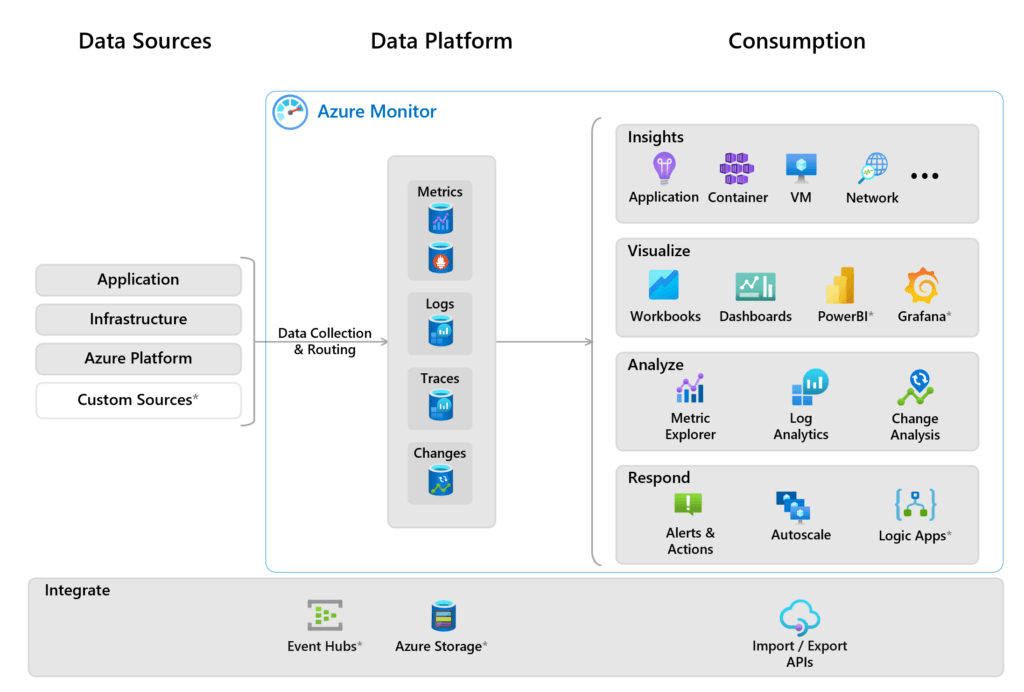
The core problem with manual cloud cost management is timing. Azure environments are dynamic. Resources are provisioned and decommissioned continuously, often through automated pipelines and infrastructure-as-code tools. Costs shift daily, sometimes hourly.
A monthly or even weekly review cycle introduces a structural lag. By the time a cost spike appears in a report, the damage is already done. An idle GPU cluster that ran for three weeks before anyone noticed it, an oversized virtual machine that has been sitting at 12 per cent CPU utilisation for two months. These are not edge cases. They are the norm in organisations that rely on periodic manual reviews.
The spreadsheet problem
Many FinOps teams still rely on exported billing data, spreadsheets and ad hoc scripts to manage their Azure cost workflows. They collect data from multiple subscriptions, normalise records, investigate anomalies, evaluate recommendations and track implementation manually.
This approach is time-consuming, error-prone and, critically, it prevents FinOps teams from focusing on higher-value strategic work. The State of FinOps 2026 report is direct on this point: organisations that are winning are scaling through automation and AI productivity, not by adding analysts.
Scale makes manual review impossible
As Azure environments grow across multiple subscriptions, resource groups and cost centres, the volume of data that needs to be reviewed expands exponentially. A team managing five subscriptions with a spreadsheet might manage. A team managing fifty subscriptions across multiple business units cannot.
Add AI workloads, storage tiers, reserved instance management and tagging governance into the mix, and the complexity quickly exceeds what any manual process can reliably track.
What AI Cloud Cost Management Actually Does?
Understanding what AI-powered cost management replaces, specifically, helps clarify the value proposition. It is not simply a faster version of the old approach. It is a fundamentally different operational model.
Continuous anomaly detection
Rather than waiting for a monthly report to surface unusual spend, AI cloud cost management systems monitor consumption in real time and flag anomalies the moment they deviate from baseline patterns. A sudden spike in storage egress charges, a GPU cluster consuming five times its normal weekend usage, a database that has not received a connection in 30 days: these are surfaced within hours, not weeks.
This is one of the most direct replacements for manual review. Instead of a person scanning charts each week, an automated system watches every resource continuously and alerts the right person the moment something changes. CloudMonitor’s real-time cost anomaly detection operates exactly this way, delivering alerts through Microsoft Teams, Slack and email before bill-shock has a chance to compound.
Automated right-sizing recommendations
One of the most time-consuming manual tasks in any Azure environment is identifying oversized or underutilised resources and building the case for right-sizing. AI-driven systems do this continuously, analysing actual utilisation patterns across virtual machines, databases and storage and generating specific, actionable recommendations.
The difference between a manual review and an AI-generated recommendation is precision and cadence. A quarterly right-sizing review captures a snapshot. An automated system captures the trend and generates a recommendation grounded in weeks of actual utilisation data, not a single point-in-time assessment.
CloudMonitor’s automated cost-saving recommendations surface exactly this kind of insight, flagging oversized VMs, idle databases and inefficient storage configurations with the dollar value of each opportunity clearly quantified.
Predictive spend and budget governance
Manual cost reviews are inherently retrospective. They tell you what happened. AI-powered systems introduce a forward-looking dimension: predictive spend modelling that forecasts where costs are heading based on current consumption trends, so teams can intervene before budgets are exceeded rather than after.
Combined with automated budget alerts and chargeback reporting by business unit or cost group, this transforms cloud cost governance from a reactive exercise into a proactive one. The Microsoft Azure Cost Management documentation acknowledges this shift, noting that native forecasting tools are a starting point, and that organisations with complex environments benefit significantly from purpose-built automation layered on top.
The Real-World Impact of Replacing Manual Reviews
The outcomes from organisations that have moved from manual cloud cost reviews to automated AI-driven management are well documented and consistently significant.
- Transport for NSW reduced Data Lake spend on Azure by 22 per cent after implementing automated FinOps governance.
- Clinic to Cloud cut their annual Azure bill by 46 per cent using automated recommendations and continuous right-sizing.
- Organisations with mature FinOps automation programs report average monthly cloud spend reductions of 25 to 30 per cent compared to those running manual-only processes.
- Teams that automate commitment management, including reserved instances and savings plans, achieve 15 to 35 per cent higher effective savings rates than those managing commitments manually.
These outcomes are not the result of larger teams or bigger budgets. They are the result of better tooling: continuous monitoring, real-time alerts and automated recommendations replacing periodic manual effort.
How to Transition from Manual Reviews to AI Cloud Cost Management?
Start with visibility and tagging
AI-powered cost management is only as effective as the underlying data quality. Before automation can generate meaningful recommendations, resources need to be tagged consistently and cost data needs to be attributable to specific teams, projects or cost groups. This is the foundational step, and it is worth getting right before deploying additional tooling.
Replace monthly reviews with real-time alerts
The most immediate improvement most teams can make is switching from periodic manual reviews to real-time anomaly alerts. This does not require a complete overhaul of existing processes. It simply means that the first signal of unusual spend arrives within hours rather than at the end of the month.
Automate right-sizing and idle resource detection
Once anomaly detection is in place, the next priority is automating the identification of savings opportunities. Right-sizing virtual machines, decommissioning idle databases and optimising storage tiers are repeatable, systematic tasks that AI handles faster and more reliably than manual review.
Extend to forecasting and executive reporting
Once the operational layer is automated, FinOps teams can shift their focus to the higher-value work: forecasting, unit economics, executive reporting and aligning cloud investment with business outcomes. This is the evolution that the State of FinOps 2026 documents across mature practices globally.
To understand how this entire workflow operates in practice inside an Azure environment, it is worth taking a few minutes to see how CloudMonitor works and what automated FinOps looks like from day one.
The Bottom Line on AI Cloud Cost Management
AI cloud cost management is not a premium feature for large enterprises. It is the operational baseline for any organisation that wants to govern Azure spend reliably in 2026. Manual reviews introduce delays that cost money. Spreadsheets introduce errors that cost credibility. Periodic oversight introduces blind spots that compound over time.
The organisations achieving the best results are the ones that have accepted this reality and invested in automation early. Not because they have large FinOps teams, but because they have built systems that work continuously, without waiting for a human to look.
The monthly cloud cost review had a good run. Its replacement is already here, and it never takes a day off.

- Multi-Cloud Monitoring: How to Get Unified Visibility Across AWS, Azure and GCP? - May 1, 2026
- Observability for AI-Powered Cloud - April 24, 2026
- FinOps Framework 2026 Explained for Azure Users - April 17, 2026