Unallocated Costs
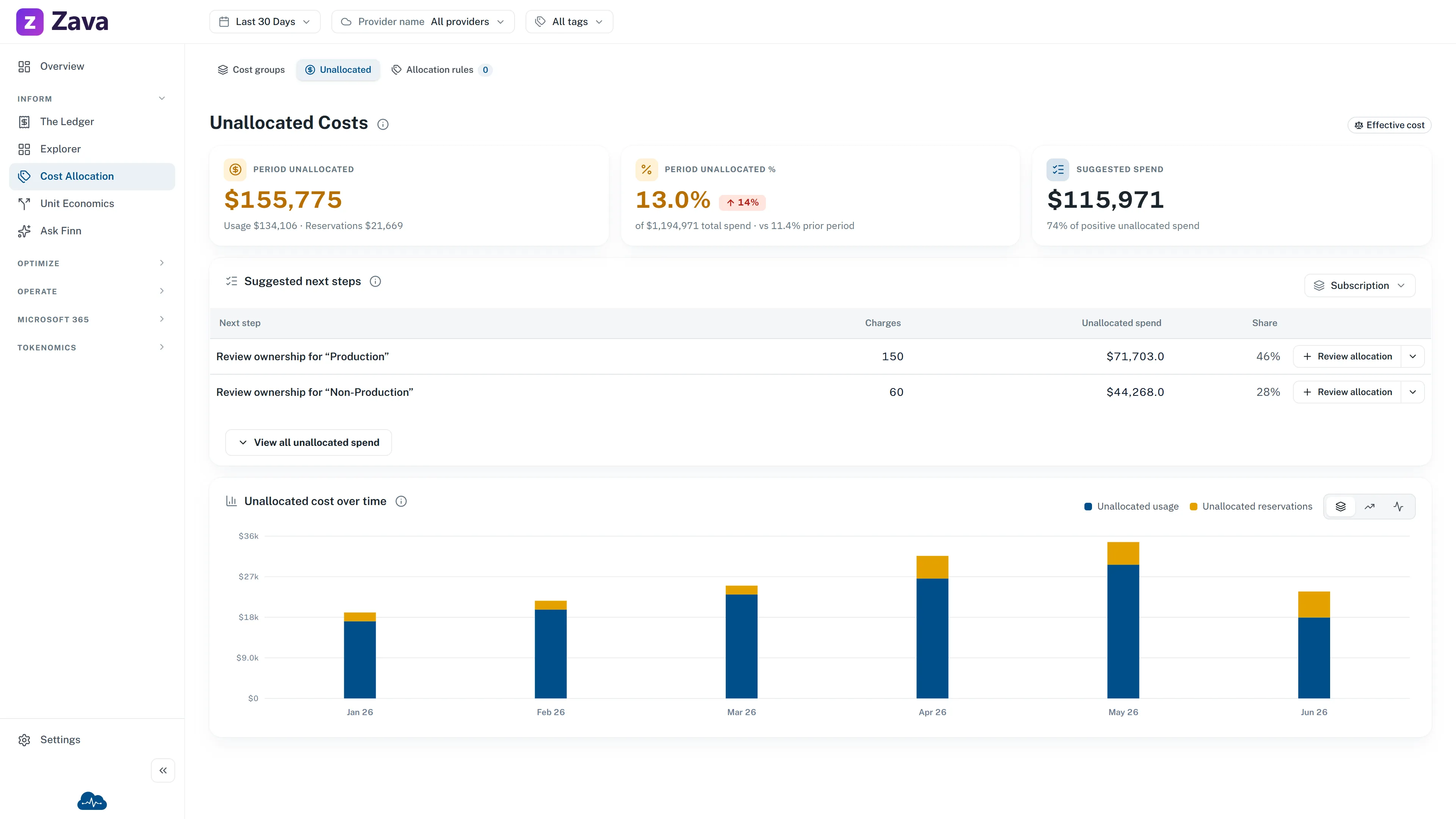
Unallocated cost is spend no allocation rule matched — so it belongs to no cost group, and in practice to nobody. This report tells you how much of that you have and whether the number is moving in the right direction.
It’s the health check on everything else. Chargeback, budgets and team-level reporting are all only as good as the fraction of spend that’s actually attributed.
The four numbers
Section titled “The four numbers”Total period cost — the whole bill, allocated and unallocated together. The denominator.
Period unallocated — spend in the period that matched no cost group, split into Unallocated usage and Unallocated reservations.
Period unallocated % — the one to watch. It’s a ratio, so it’s directly comparable with the previous period regardless of whether the bill grew, and it doesn’t shift when you change cost basis.
Last month unallocated — the most recent complete calendar month, shown against that month’s whole bill.
Unallocated cost over time charts it, split by usage and commitment purchases.
Usage and reservations are different problems
Section titled “Usage and reservations are different problems”Worth separating before you go fixing anything.
Unallocated usage is normally a tagging gap. Resources are running without whatever your rules match on. The fix is upstream, in how resources get created.
Unallocated reservations is normally an allocation-rule gap. A commitment purchase is a real charge that has to land somewhere, and it often doesn’t carry the tags an ordinary resource does. Rules can route these by name — see the cost group code in the glossary.
Why the cost group filter is grayed out
Section titled “Why the cost group filter is grayed out”Because it would be a contradiction. Unallocated cost is, by definition, spend outside every cost group, so scoping it to one group would return nothing. CloudMonitor grays the chip and says so rather than showing you an empty report.
Every other filter applies normally.
What to do about it
Section titled “What to do about it”There’s no single right number, but the trend matters more than the level. A percentage that’s climbing means new spend is arriving unattributed faster than you’re closing the gap.
Two levers:
- Allocation rules route existing spend to a group without touching any resource. Fastest fix, and the right one for commitment purchases and shared services.
- Tagging fixes it at source, so new resources arrive attributed. Slower, but it’s the one that stops the problem recurring.
Both are admin work — see the how-to articles.
Everyone can see this
Section titled “Everyone can see this”Every user is automatically a member of the built-in Unallocated group, so this report is visible to everyone regardless of which cost groups they belong to. That’s deliberate: unattributed spend is everyone’s problem, and hiding it from most of the organization is how it grows.